
Quality Innovations for Digital Pathology

Test Tools

We are developing physical test tools to measure variability in the WSI pathway. These can also feed into standards that can help us achieve better quality and reduce variation for the future of image quality in digital pathology.

It is vital variation in images is measured, and in some cases controlled to help AI developers assess its impacts and unlock digital pathology’s potential for faster and more accurate diagnosis.
POUQA

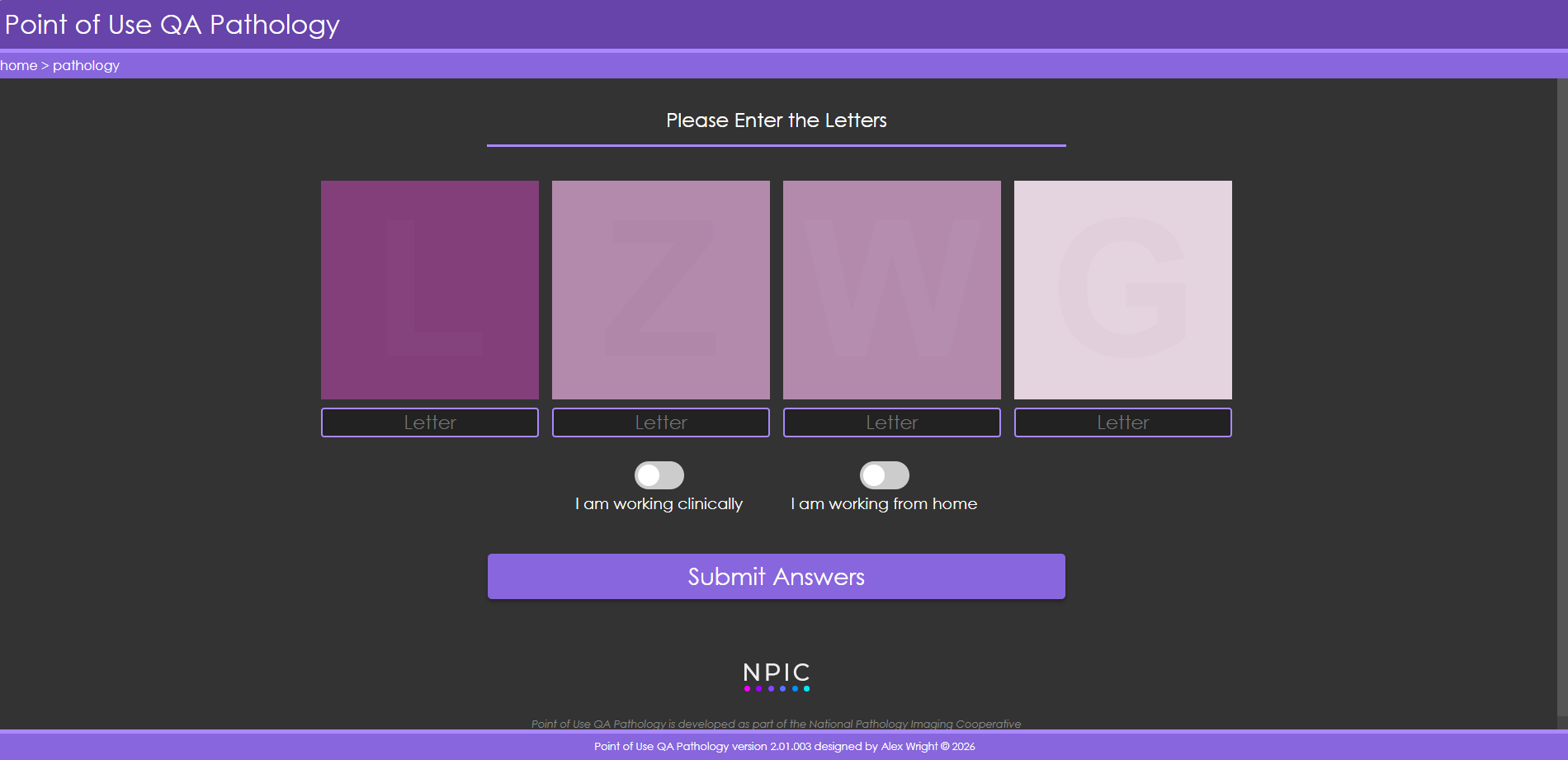
A web-based Point-of-Use Quality Assurance (POUQA) tool for remote assessment of viewing conditions for reporting digital pathology slides. The test requires visual discrimination between colours derived from haematoxylin and eosin staining, with a perceptual difference of ±1 delta E (dE). The tool itself is free to use and can be found here: Point of Use QA | Point of Use Device Validation for Digital Pathology (leeds.ac.uk)

This tool was developed by us and is free to use, but in this form it cannot be used for commercial use, if you wish to make use of this tool please contact us to discuss how we can support this.

Display Assessment by Visual Evaluation (DAVE)

DAVE is a test pattern consisting of a digital image that can be downloaded and used to check the performance of any display.  This is available free on our website alongside supporting information to help you use and understand the tests. Various tests inlcuded within or alongside the test image are: refresh rate, contrast perception, resolution and gamma function.

This tool was developed by us and is free to use.

The website is coming soon.

Digital pathology monitor

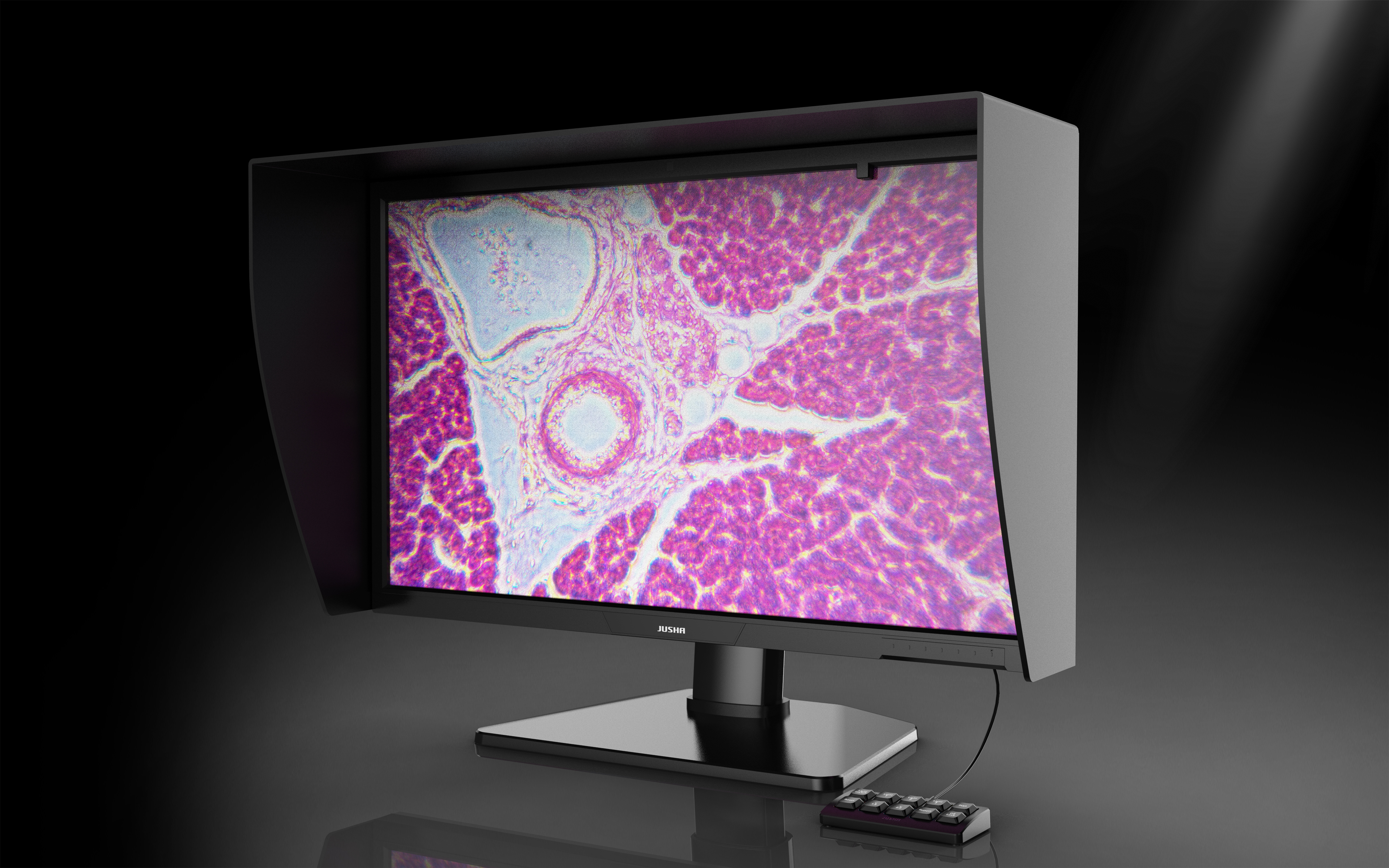
Designed in the NHS and developed with JUSHA by the National Pathology Imaging Co-operative (NPIC). This monitor was specifically designed for digital pathology and designed by an expert in display quality with over 35 years experience in healthcare imaging. Influenced both by how pathologists work and evidence-based research.

For more information, please see here: PA8132G — Jusha AU

This product was made in collaboration with JUSHA Commercial & Trading Co, Ltd. Under a non-exclusive consultancy agreement. We receive royalties from under this agreement for every unit sold but are not bound by any clauses to promote this device over any other and retain our academic freedom and integrity in this space. 

Tango

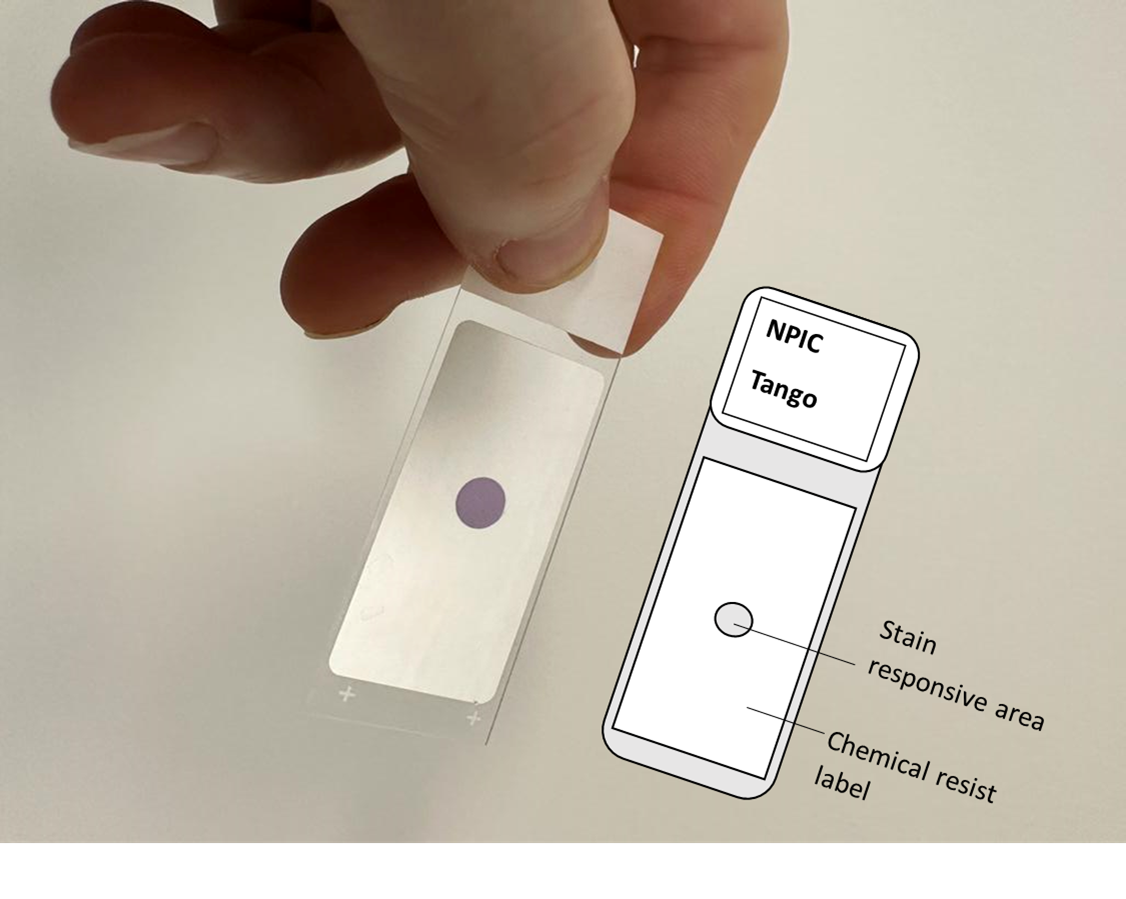
Tango is a stain-assessment test slide, designed to objectively measure colour variation in H&E-stained samples. Instead of relying purely on visual judgement, Tango provides quantifiable data on stain intensity, helping laboratories understand and improve day-to-day staining consistency as well as optimisation of reagent use, potentially reducing both cost and waste.

These tools are currently available under research agreement, but will be commercially available in the near future.

Please do contact us if you are interested in working with us.

Miniscanner

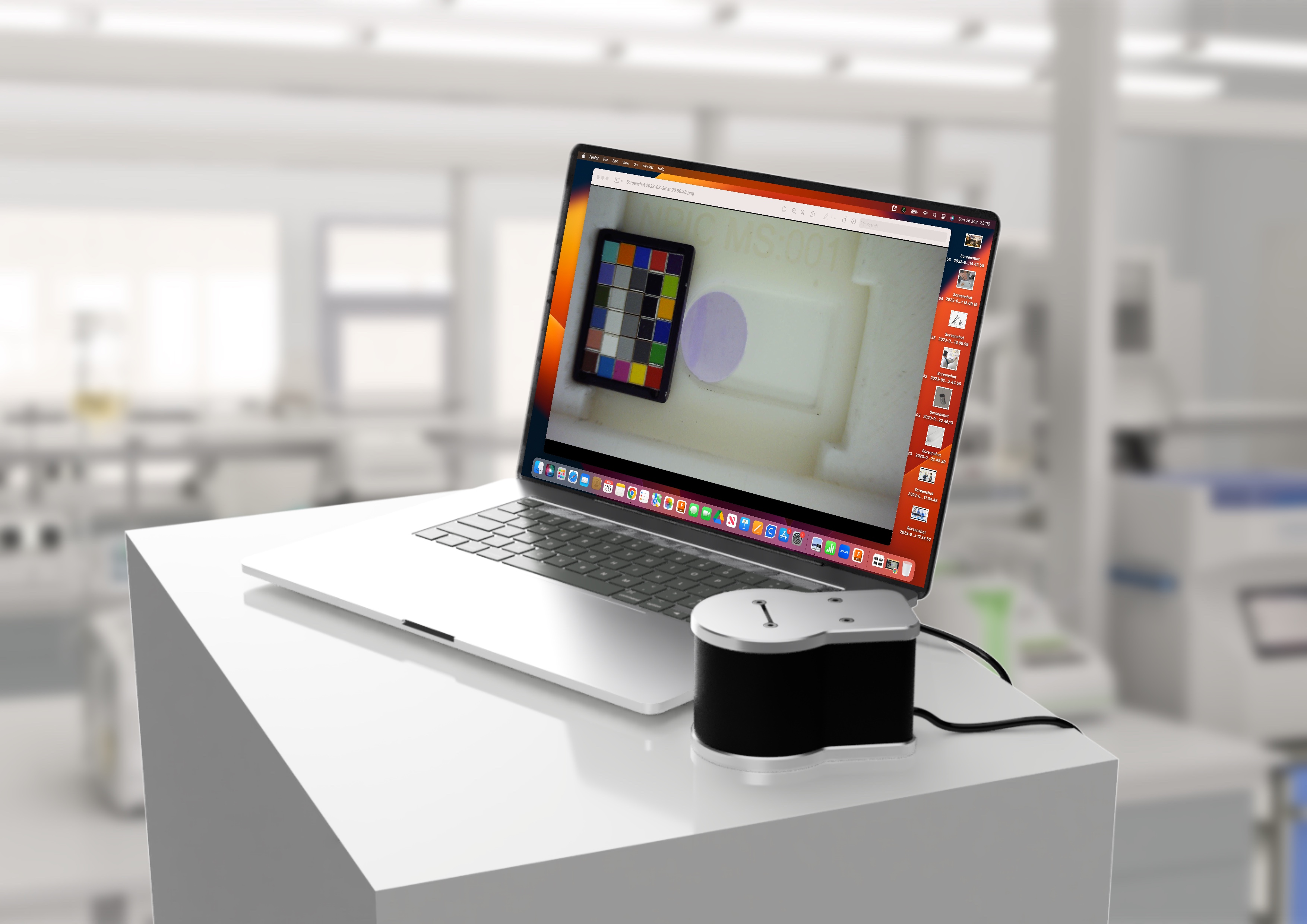
The miniscanner is a small ergonomic point of use digitiser for reading Histopathology slides, including Tango, and giving immediate feedback on stain quality to users.

These tools are currently available under research agreement, but will be commercially available in the near future.

Please do contact us if you are interested in working with us.

WSI scanner test objects

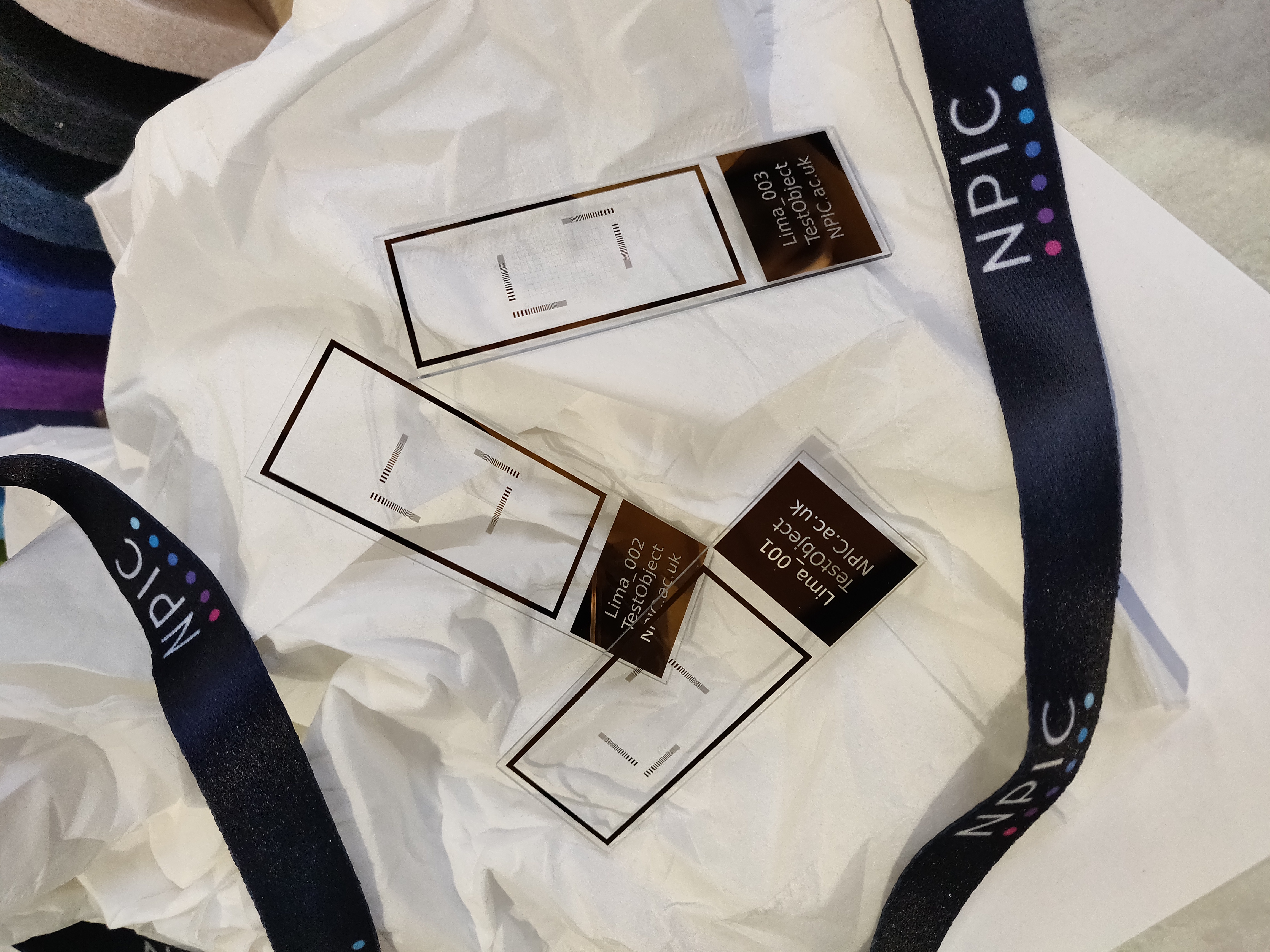
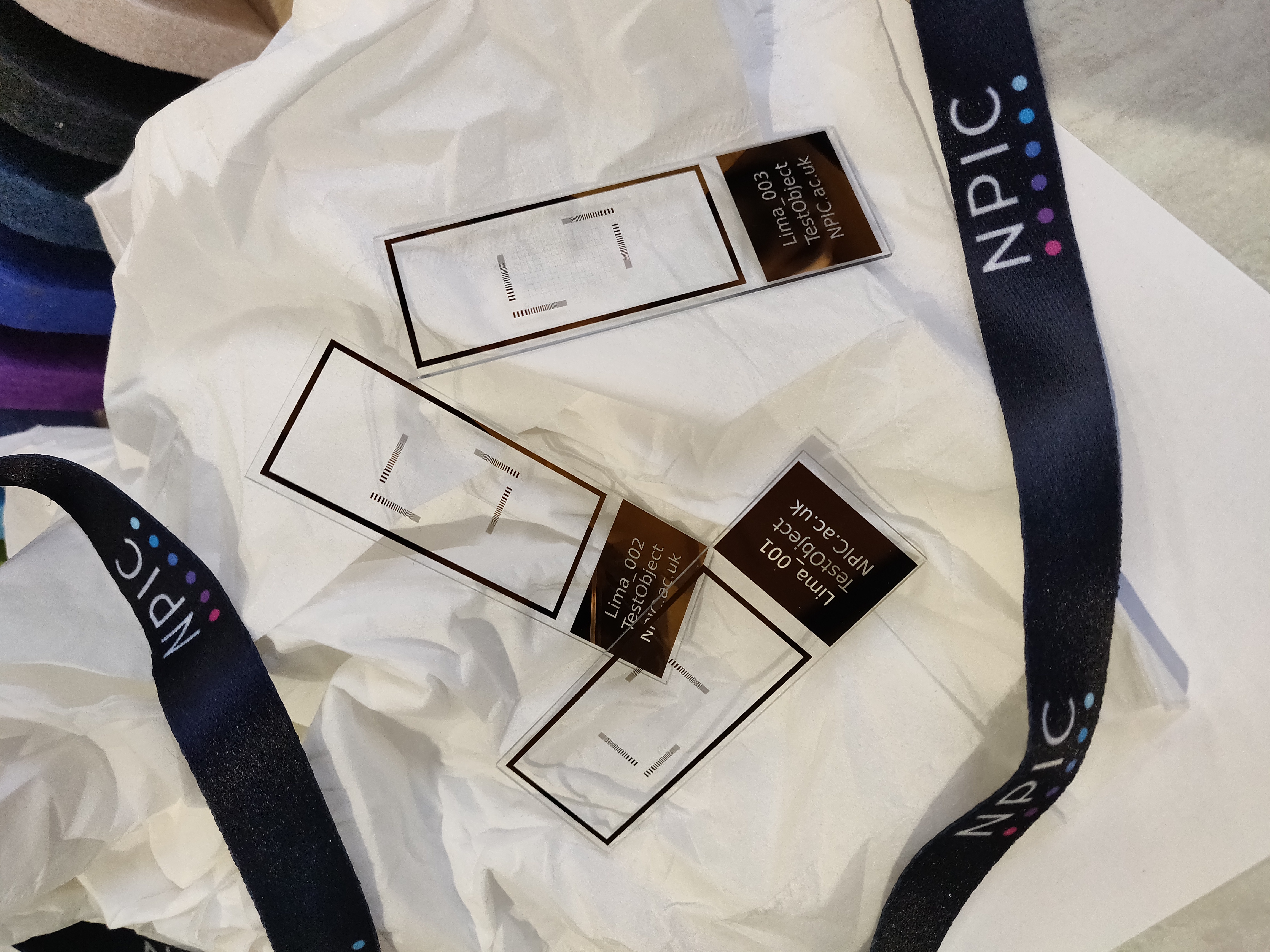
ScannerQA tools, a set of innovative quality control tools to quantify and assess digitisation introduced variability. They are designed for lab use for independent QA/QC of their WSI scanner(s). These devices will help with intra- and inter- slide digitisation consistency improving the histology pathway and opening the door for new quality standards. They would also facilitate a more consistent data set for AI development and adoption; key for coping with increased diagnostic demands whilst the pathologist workforce decreases. Out tools are called Lima test objects.

These tools are still undergoing development and validation and are currently available under research agreement only.